Since the creation of models tailored to the individual or the creation of useful tools and educational projects, 3D printing enables anyone to realize digital ideas in real life, one layer at a time. Fortunately, entry-level 3D printers are now cheaper, more dependable, and accessible than ever previously.
This is a complete beginner’s guide that is directed at the actual beginner, whether it is a student or a teacher, a hobby crafter or artist, or a DIY enthusiast. You’ll learn:
- What is a good entry-level printer?
- What features to look for
- Best 3D Printers for Beginners.
- The decision to use FDM or Resin.
- FAQs and how to go about it without making similar mistakes.
What is the Rationale of Learning 3D Printers for Beginners?
The 3D printer is a beginner machine that is designed to ensure that your first experience in printing is painless, secure, and stress-free. They prioritize:
- Furnished with a simple installation (Usually ready-assembled)
- Automatic calibration and leveling.
- Coherent guidelines and learning assistance.
- At a cost-effective price without the degradation of print quality.
These models are ideal when you have always wondered about 3D printing but do not want to get into the technical specifics at this point.
Basic Capabilities of 3D Printers That Are Easy to Use.
We are now going to discuss the particular models, but we should first discuss what to consider in deciding on your first printer.
- 1. Simple Assembled (or Fully Assembled)Majority of easy to learn printers are already complete or require a few screws to assemble.
- 2. Auto Bed-LevelingFlattens your print surface to ensure that your print layers are adhesive and form properly. An essential requirement to prevent most of the problems.
- 3. Direct Drive Extruder has filament flowing straight into the hotend, which enhances accuracy and allows you to print pliable materials such as TPU.
- 4. Build Volume decides the sizes of parts that you can print or the number of parts that you can print at a time. At least 100x100x100mm will be adequate in hobby projects, or 220x220x250mm will be more flexible.
- 5. Reliable Hotend and NozzleFind high temperature capabilities and long life materials such as copper-titanium or all-metal hotends, which minimise clogging.
The 3D Printers for Beginners Best list (Reviews, Detailed)
The following are 3D Printers for Beginners that are chosen very wisely and can offer you a combination of all the points of ease of use, excellent performance, as well as features that will make such printers ideal to learn and grow with.
1. Creality Ender 3 Dde Direct Drive Extruder Kit
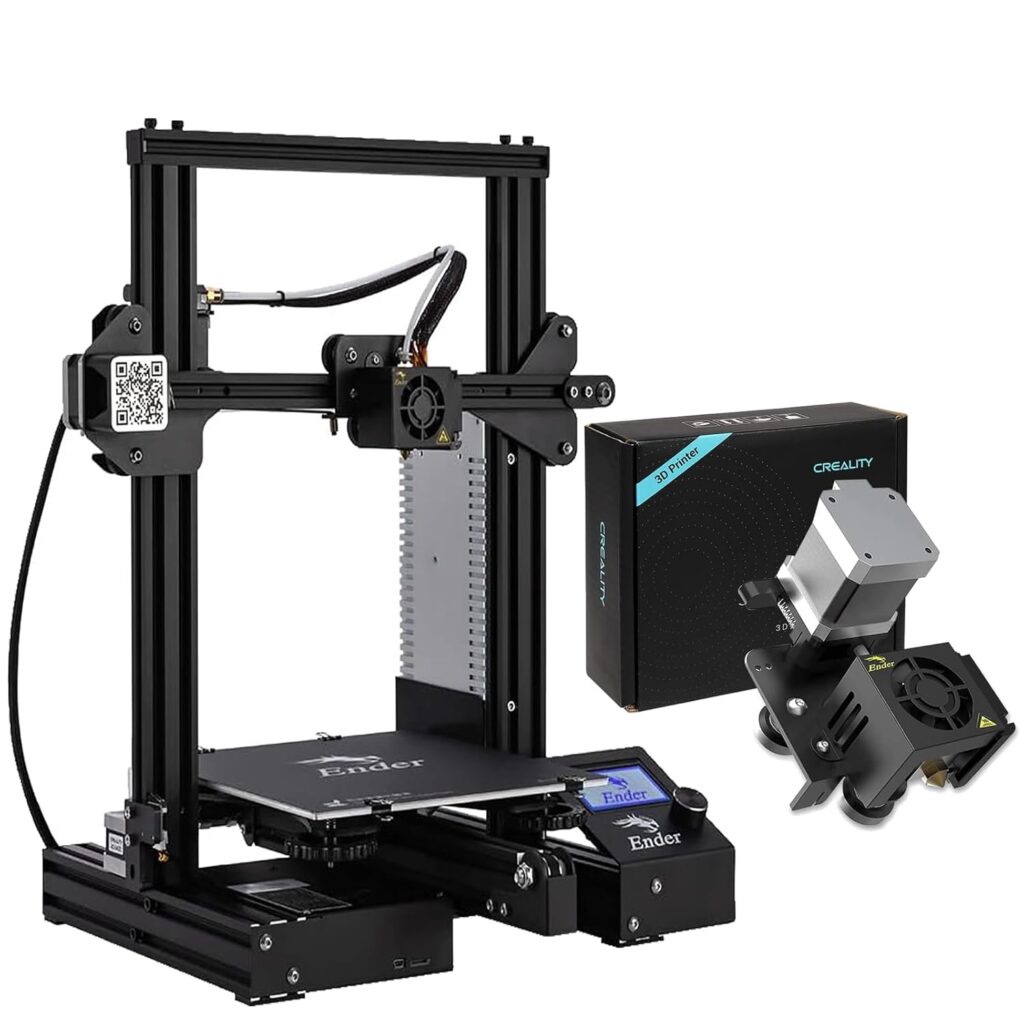
Creality Ender 3 Dde Direct Drive Extruder Kit is one of the most popular 3D Printers for Beginners on the planet – and not without a reason. It is cheap, trustworthy, and has an enormous following supporting it. The only difference between this version and other versions is that a Direct Drive Extruder Kit has been added, thus making it perfect for beginners.
Why It’s Beginner-Friendly:
- Simple to use installation manuals.
- Lessens the jamming and plugging of filaments.
- Works with popular slicing software, such as Cura.
Best Suited: First-time users interested in growing with time and those who can tolerate small updates or upgrades as they go along.
2. 3D Printer (Fully Assembled, Auto Operation) Basic Compact 3D Printer
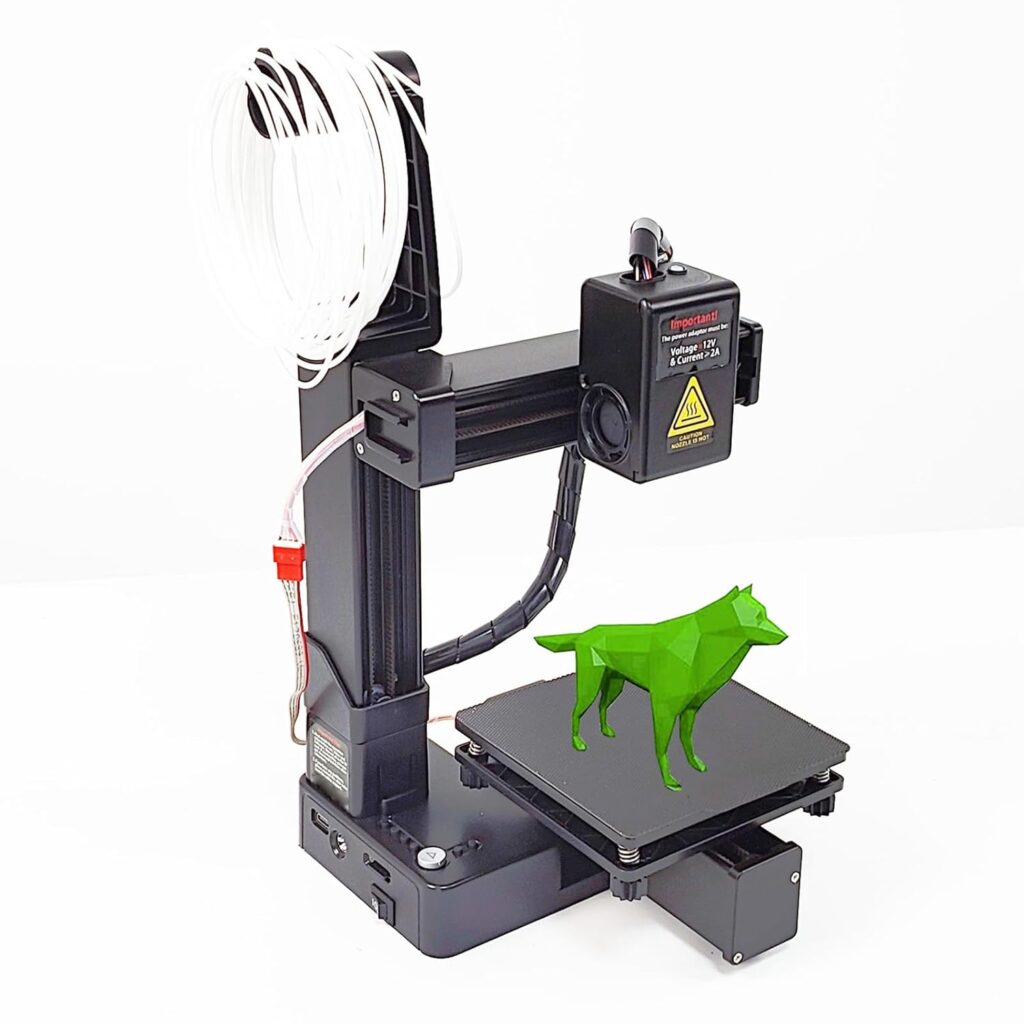
Mini FDM is created to suit people who do not want to waste their time on assembling the printer, but start printing immediately. It is an excellent option for teachers, younger people, or users with scarce space.
Beginner Compact 3D Printer (Fully Assembled, Auto Operation) is the best option to be used by educators, younger users, or people with limited space.
Why It’s Beginner-Friendly:
- No complicated settings
- Very great in a school or at home studios.
- Lightweight and portable
Best use: Children, educators, extreme novices, and amateur hobbyists.
3. ELEGOO Neptune 4 Pro
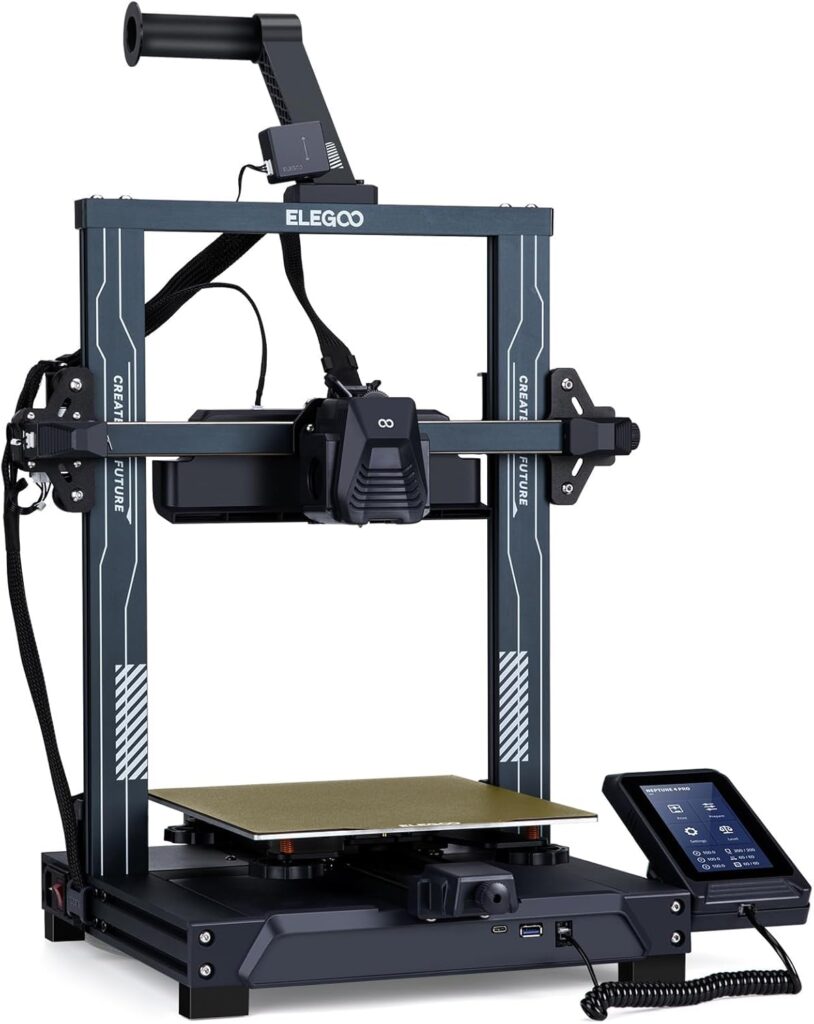
This printer is user-friendly and at the same time advanced. It is installed with Klipper firmware, which allows it to reach super-fast speeds and yet provide smooth and accurate prints.
The ELEGOO Neptune 4 Pro is already installed with Klipper firmware, which allows it to match the lightning speeds without performing erroneous and rough prints.
Why It’s Beginner-Friendly:
- Comes ready to print quickly
- Reduced waiting time without downgrading quality.
- Future-proof and upgradeable.
Perfect Fit: Rapid learners, tinkers, designers, and those who want to be fast and accurate immediately.
4. ANYCUBIC Photon Mono 2 Wash Cure 3.0

Resin printing could be a preferable option in case you would like to have extreme detail and smooth surfaces. The ANYCUBIC Photon Mono 2 Wash Cure 3.0 is a resin printer with a bundle of a convenient washing and curing machine, making it easy to use.
The ANYCUBIC Photon Mono 2 and Wash & Cure 3.0 is an entry-level resin printer that includes a handy washing and curing system.
Why It’s Beginner-Friendly:
- Included with all the equipment to work with resin.
- Delivers professional-level information.
- Large on small models, figurines, jewellery, and miniatures.
Ideal Use: Artists, model makers, board game designers, and anyone who requires a quality finish on surfaces.
5. Creality Ender 3 V3 SE + Filament Bundle PLA

It is a great entry-level package that comes with one of the latest entry-level Ender printers and high-quality PLA filament.
This package is a great entry kit, which consists of one of the latest entry-level Ender printers and high-quality PLA filament.
Why It’s Beginner-Friendly:
- All-in-one starter pack
- Manages various materials.
- Stable hardware that can be readily leveled.
Best due to: Newcomers who desire a plug-and-print system with filament.
Success Tips in Using 3D Printers for Beginners.
- PLA – This is the simplest material to print on and learn with.
- Use Pre-Sliced Models – There are a lot of printers that have sample files to make sure that the initial prints are not hard.
- Monitor the First Layer – You need to remain in the first 510 minutes to ensure it adheres to the bed.
- Adhesive Stick or Tape on the Bed – Gets the corners extra adhesive.
- Be in Communities, Reddit r/3Dprinting, or Facebook communities such as 3D Printing for Beginners have enormous support.
Frequently Asked Questions of 3D Printers for Beginners.
What is the most user-friendly 3D printer type, FDM or resin?
Begin with FDM unless you require very fine details or donut-sized prints. Resin is also more exact and requires additional attention and post-treatment.
Do I need special software?
Yes, you will require some slicing software such as Cura or PrusaSlicer. They are open-source and easy to use.
What are some of the pitfalls that newcomers make?
Failing to level the bed, failing to look at the problem of lubrication and frequent cleaning, and attempting to print too large too fast.
Is it safe to use 3D printers by kids?
Yes, under adult supervision. Use low-heat material, such as PLA, and do not use sharp supports or work with resin on its own.
A Beginner’s Guide to 3D Printers: What to Buy and Why
The abundance of 3D Printers for Beginners available to novice users does not necessarily make selection confusing. Consider what you want to make, how much time you want to spend in set up and learning, and the most important considerations are print detail, print size, and expandability.
Printers such as Creality Ender 3, ELEGOO Neptune 4 Pro, and ANYCUBIC Photon Mono 2 are the best ones to begin with and expand. The initial step is small, and you learn by trial and error, and with creativity, you will have your way into the world of 3D printing.
Begin small and learn by trial, be creative, and allow the environment of 3D printing to take you through the world.