

Artificial Intelligence (AI) ceased being a matter of the future; it is a constantly changing force that shifts industries all over the world. By 2025, the implication of AI would become monumental in industries starting as far as healthcare and extending to finance and retail to manufacturing and other pan X industries. In this article, we will explore how “artificial intelligence is changing industries in future” the role it plays in reshaping business landscapes, and the emerging trends that are driving this revolution.
The Age of Artificial intelligence
The current breakthroughs in the development of the artificial intelligence are doing not only revolutionizing the tech sphere, and they transform the very essence of the industries all over the world. So, with predictive analytics and automation, natural language processing and machine learning, AI has been demonstrated as a stand changer in a variety of fields. With this coming into 2025, the use of AI by businesses will be more impressive, and it is going to have the potential to increase productivity and decrease expenses, customer experiences among other things, and even open up newer forms of businesses.
In this article, we will take a deep dive into how ”Artificial artificial intelligence is changing industries in 2025”, identifying key areas where businesses are experiencing significant disruption and innovation. By the end, you’ll have a clear understanding of how businesses are adapting to AI and the trends to watch out for in the coming years.
1. Artificial Intelligence in healthcare

Transforming Diagnostics and Individualized Treatment
Medical care is a sphere where new technologies have been applied ever since it exists, and AI is one of them. As far as 2025, AI is already going to transform diagnostics and personal medicine. A neurodegenerative disorder, cancer, heart disease, etc. are just some of the conditions that machine learning algorithms are helping to be diagnosed earlier and more accurately by doctors nowadays.
As an example, the use of AI in imaging can be analyzed to detect medical scans abnormalities that the human eye might be unable to detect. Also, AI services to process databases of patient information (including genetic information) are being utilized to provide unique treatment proposals. The AI in drug discovery is also developing, as it decreases the duration of developing new drugs.
In 2025, it is estimated that AI will continue to streamline the healthcare process including diagnosis, treatment, and even post-care tracking that will make healthcare more efficient and accessible to a global population.
Artificial Intelligence Virtual Healthcare Assistants
There is another field in which AI is going to have a significant impact on healthcare the virtual helpers in healthcare. These AI-powered assistants can handle patient queries, schedule appointments, and even provide basic medical advice, freeing up doctors’ time for more complex cases. They are also useful in remote patient monitoring where you can have the health provider monitor the progress of his or her patients in real time.
Moving forward, the trend of increasing adoption of telemedicine and remote care by more individuals will make such AI-powered instrumentation part and parcel of the healthcare ecosystem, delivering more efficient solutions that are faster in their delivery to both patients and medical professionals.
2. AI in Retail: Individualization and Automation

Improved Customer Experience by Personalization
One of the most vibrant areas that AI is making its mark is in retail. Hyper-personalization is one of the most critical trends in the retail area in 2025. With the use of AI, retailers can give their customers personalised shopping experiences by processing their behavioural patterns, preferences and shopping history. Real-time personalized product recommendations, promotions, and advertisements can be offered to individual customers by the retailers with the help of AI-fuelled recommendation engines.
Such amount of personalization does not only make customers more satisfied but also leads to more sales and to a brand loyalty. Soon, it will become standard when customers will be offered personal terms, promotions, and even support, depending on what created using AI knows about their preferences.
Inventory Management and Supply Chains Automation
Inventory management and supply chain automation are also getting garnered with AI and performing a crucial part. The use of machine learning algorithms in demand prediction is making a difference that enables retailers to match the right products at the correct time. Robots and drones are already autopiloting in warehouses taking tasks off people to minimize mistakes and accelerate the processes of picking and packing.
By the year 2025, it is even more likely that AI will be able to improve supply chains even more by automating different parts of them, including forecasting inventory necessity and finding the best routes of delivery. These artificial intelligence systems will result in reduced operating costs, shorter delivery times to properties and the customers will get their orders much faster than before.
3. AI in Financial: A New Way of Managing Risk and Finding Frauds

Smart Risk Evaluation and Decision making
Our financial industry is becoming more dependent on artificial intelligence in order to make wiser decisions, especially in the domain of risk predictions and management. AI algorithms can process loads of data provided by various sources and make estimations about the development of the market, evaluate risks, and make more precise financial projections. By 2025 it is reasonable to anticipate the role of AI in optimising the trading strategies and assisting the investors in making better decisions through monitoring real-time market sentiment and real-time market data.
Moreover, the AI-fueled technology can be used in credit scoring to make financial institutions make better assessments of loan facilities. Analyzing a broad variety of data, including spending patterns, social media use, and so on, the AI can come up with more precise results on creditworthiness than the conventional way.
Detection and prevention of fraud Fraud Detection and Prevention
The other major field that Artificial Intelligence is having a massive impact in finances is fraud detection and prevention. The analysis of the pattern of transactions and the ability to identify anomalies in real-time may pose a great reduction in the risk of fraudulent transaction by AI. However, with each incoming bit of data, the machine learning model becomes even more accurate and is thus able to detect the instances of fraud and stop them more promptly than ever.
The more advanced fraud detection products powered by AI will be by 2025, giving the financial industry an opportunity to combat cybercriminals and reduce losses by using the available financial tools.
4. Artificial intelligence in the field of manufacturing: predictive maintenance and automation
Automation in the transformation of Production Lines
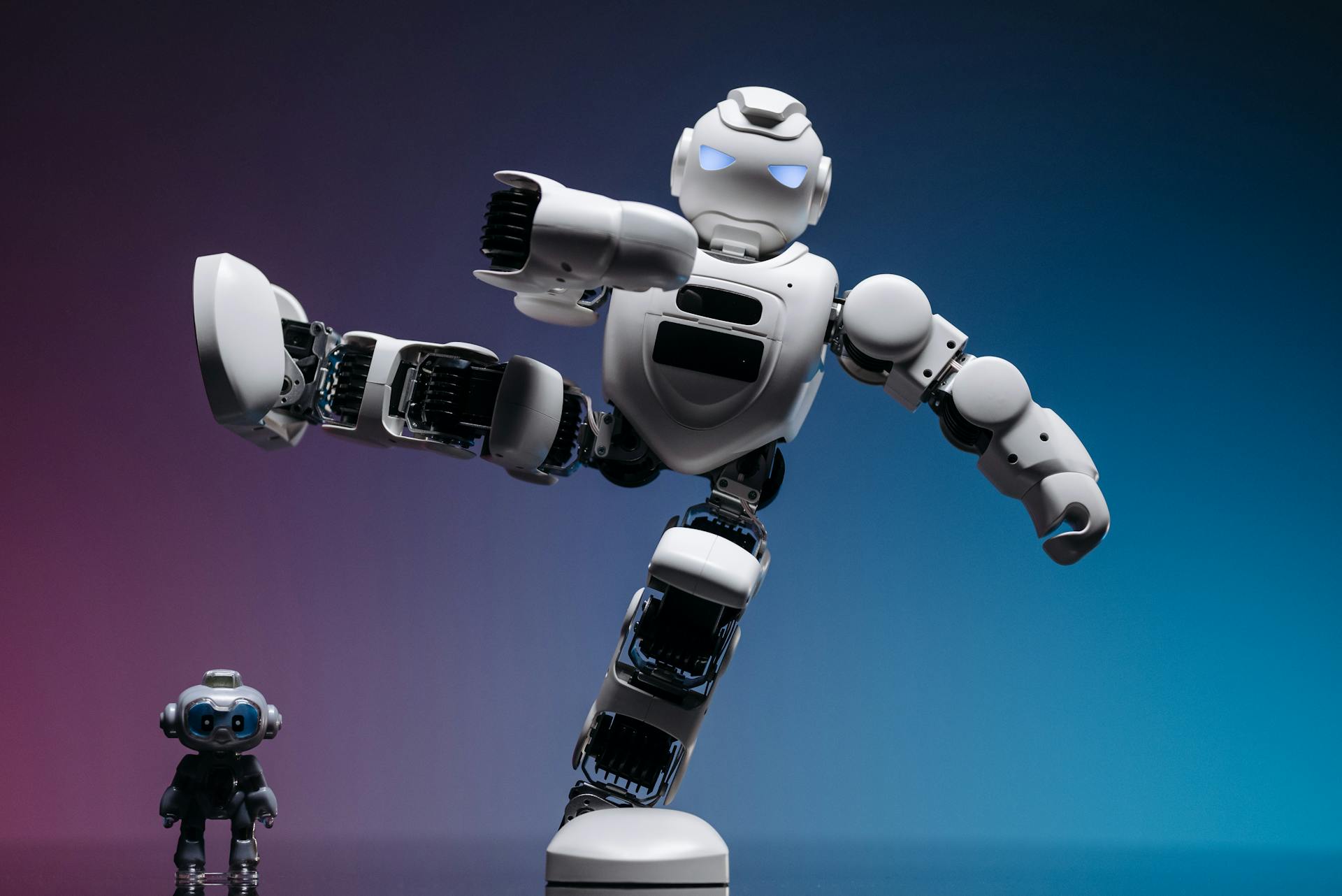
Automation in production lines across the manufacturing industry is undergoing revolution by way of AI powered automation. Automated systems and robots, fueled by AIs, can accomplish complicated tasks like assembly, welding, packaging, and many others with cleanliness and accuracy. By 2025, the emergent AI-based robots will be able to receive and learn new tasks without human interaction and, hence, more fruitful.
The four AI systems are flexible with modifications in production details and supplies and will allow the manufacturing procedure to be streamlined and calibrated to produce products within the same standards. By adopting AI in productive ventures, factories will be able to run more efficiently, at low costs and be able to cope with the rising demands of consuming high quality products.
Predictive Maintenance: Downtime Reduction and Increasing Efficiency
Predictive maintenance in the manufacturing industry is also taking the help of AI. AI systems can analyze the data that the machines use with sensors to know when a certain piece of equipment will fail and enable manufacturers to undertake some form of maintenance before anything can go wrong. This lowers the downtime, enhances performance, and saves corporations the expensive repair cost.
By 2025, predictive maintenance will be a routine in the manufacturing facilities so that the businesses will be able to get rid of operations disruption and increase the equipment life period.
5. The AI approach to transportation: smart logistics and driving vehicles

The Self-Driving Cars and Autonomous Vehicles
Autonomous vehicles are another example of primary influences of AI in transportation that will become common in transportation. This means that self driving cars, trucks and drones will be seen more and more in the road by 2025. Such self-driven cars will transform the delivery of goods and transportation of people, minimizing accidents in traffic, burning less fuel and cutting on transportation charges.
The autonomous vehicles will also present new opportunities in the delivery business. As an example, AI-controlled drones can be used to send packages to end-users, and autonomous vehicles can create less human need in the logistics business, which will result in more monetary savings and efficiency.
Smart Logistics by the use of AI
Optimization of logistics will also be made through AI. Artificial intelligent powered systems will assist companies to analyze the traffic patterns, improve delivery routes, and management of the fleet. In 2025, the transportation of goods will be more sustainable since smart logistics systems are accurate enough to anticipate delivery time and realign routes to ensure that they do not include delays in the entire process.
The Future Perspective of the Industries Driven by AI
As we approach 2025, “artificial intelligence is changing industries in future” in ways that were once thought to be impossible. AI’s role in healthcare, retail, finance, manufacturing, and transportation is already transforming business models and reshaping the global economy. AI is increasingly found in industries in such contexts as automation and predictive maintenance, personalized experience, prevention of frauds, etc.
In the future, the AI-enabled companies will have a competitive advantage boosting efficiency, lowering costs and delivering more value to customers. In industries that are not embracing AI wholesomely, new opportunities will emerge in the coming years in the effort to leverage AI as an instrument of innovation and market growth.
Finally, Artificial Intelligence is not only posed to change the way business is done, but also transformation to the way we live and work. The future of AI is not only rosy but by 2025, there is much more to look forward to in terms of industries that are being transformed by the AI.


marijuana gummies online with safe packaging